
Patent drafting determines how the technical disclosure is translated into a legal claim set
The strongest drafting work does more than describe an invention. It organizes the disclosure so that the claim strategy, embodiments, alternatives, drawings and terminology support the protection being sought and give room for later prosecution.
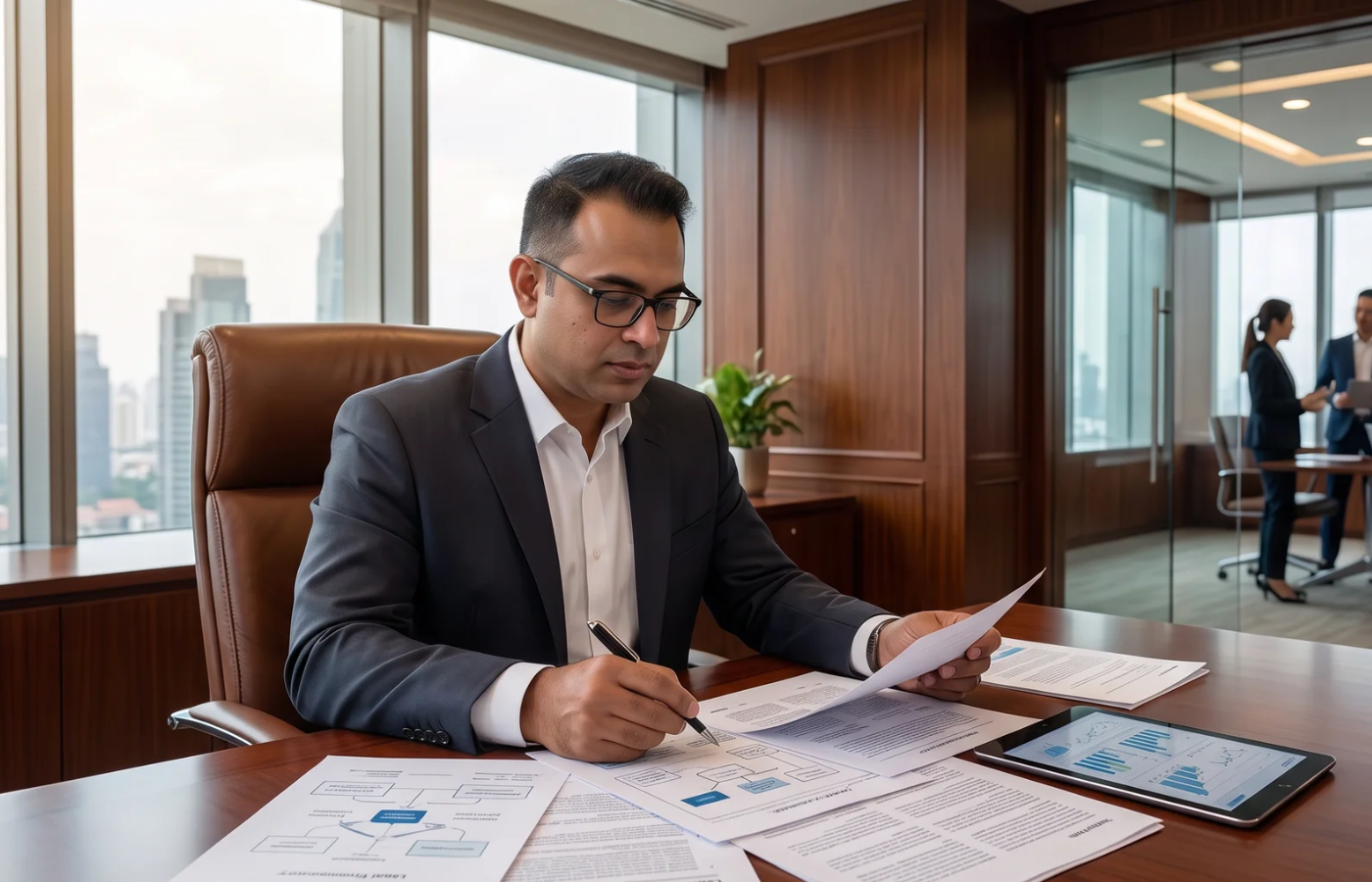
Start with the invention disclosure, not with generic claim language
For a focused drafting review, provide the technical problem, architecture or process, inventive features, alternatives, drawings, experimental material where relevant, known prior art, ownership information and target filing jurisdictions.
What Is Patent Drafting and Why Does It Matter?
Patent drafting combines a precise technical description with claims that define the protection being sought. Inventor interviews, prior-art research, alternate embodiments, drawings and jurisdictional requirements should inform the application. A strong drafting process preserves technical detail while avoiding unsupported claims about grant outcomes or business value.
What does patent drafting actually include?
Patent drafting is the preparation of the application documents that explain the invention and define the scope of protection being sought. For an Indian complete specification, Section 10 requires a full and particular description of the invention, its operation or use and the method by which it is performed. It also requires disclosure of the best method known to the applicant and claims that define the scope of the invention. An abstract and drawings, where needed or required, complete the technical record.
This means drafting has two linked functions. The description must teach the invention with enough technical detail to support the application, while the claims identify the legal boundaries for which protection is requested. A claim cannot safely operate in isolation from the specification because Section 10 requires the claims to be fairly based on the disclosed matter.
Technical disclosure
Capture the invention, embodiments, alternatives, technical effects, implementation details and drawings with enough depth to support the intended claim scope.
Claim architecture
Define independent and dependent claim positions around the inventive concept while distinguishing relevant prior art and preserving fallback positions.
Prosecution flexibility
Use consistent terminology and adequate support so later amendments and arguments remain anchored in the application as filed.
Why are patent claims so important?
The Indian Patent Office Manual describes claims as the part of the patent application that defines the contours of the rights if a patent is granted. The claims therefore require careful drafting. They should cover the protection being sought while still distinguishing the prior art. Section 10(5) further requires the claims to relate to a single invention or a group linked by a single inventive concept, and to be clear, succinct and fairly based on the matter disclosed in the specification.
This is more precise than saying that “the claims establish what you own.” Before grant, the claims define the scope being sought. After grant, the allowed claims define the scope of the patent rights, subject to the applicable law and later validity or enforcement analysis.
What should the specification contain?
A strong specification typically explains the technical field, the problem being addressed, the invention at a functional and structural level, example embodiments, optional variations, drawings where useful, and enough implementation detail to support the intended claims. The exact structure will vary with the technology. Mechanical inventions may rely heavily on drawings and component relationships. Software and AI inventions may need careful description of system architecture, data flow, technical effects and implementation. Chemical, biotech and pharmaceutical inventions may require experimental support, ranges, examples and specialized disclosure.
The key drafting question is not how much text can be added. It is whether the disclosure supports the claim scope that may matter during examination, amendment, licensing, diligence or enforcement. Unsupported breadth can become a prosecution problem later.
How should prior art influence drafting?
Prior-art searching is not a substitute for drafting, but it can materially improve the drafting process. Search results help identify what is already known, where the likely novelty lies, which terminology appears in the technical field and how competitors have framed similar inventions. The drafter can then structure the specification and claim set around real technical distinctions rather than generic language.
Prior art also helps avoid a common drafting mistake: describing only the commercial embodiment that exists today. If the real inventive concept can be implemented through several architectures or sequences, the specification should consider those technically supportable alternatives so that the application does not become unnecessarily narrow.
Claim scope begins with disclosure quality
If a technical feature, alternative embodiment or fallback position is not adequately disclosed at filing, later prosecution may offer limited ability to introduce it. A drafting review should therefore test the disclosure against the claims before filing.
How does priority affect patent drafting?
Priority is claim-specific. Section 11 of the Indian Patents Act ties the priority date of a claim to the earlier specification in which the claimed subject matter is fairly based. This is why a provisional application should not be treated as a placeholder containing only a rough idea. If the later claim relies on subject matter that was not adequately disclosed in the provisional filing, the earlier priority position may not support that claim.
For startups, this creates an important drafting discipline: file early enough to manage disclosure risk, but do not assume that an incomplete provisional filing automatically secures every later version of the invention. The initial disclosure should capture the technical core and important alternatives that are already known.
How is patent drafting different for startups and larger companies?
The legal drafting principles do not change because the applicant is a startup or a large company, but the portfolio context often does. A startup may need to prioritize one or two inventions that support fundraising, a product launch, licensing or a key market entry. A larger company may coordinate multiple related applications across product lines and jurisdictions. The drafting strategy should reflect the commercial objective without sacrificing disclosure quality.
What makes a patent application easier to prosecute?
No drafting method can guarantee grant, but several practices can improve prosecution readiness: use defined terminology consistently; link claim terms to the description; provide technically meaningful fallback positions; avoid unnecessary ambiguity; identify the inventive concept clearly; ensure drawings and examples support the description; and test whether each important claim feature has explicit or clearly inferable support.
The Indian Patent Office Manual states that claims should be clear, succinct, specific rather than vague, and fully supported by the description. Those drafting principles matter because later objections often focus on clarity, support, novelty, inventive step, unity or excluded subject matter.
Can a weak application simply be fixed later?
Only to a limited extent. Patent systems generally restrict the introduction of new matter after filing. In India, the available amendment framework must be considered together with the application as originally filed. This makes filing-day disclosure quality important. Later claim narrowing, clarification or reorganization may be possible, but the application should not be drafted on the assumption that missing technical substance can simply be added during prosecution.
How should technology-specific drafting be handled?
Different technologies create different disclosure and claim-design risks. Software and machine-learning inventions may require careful technical framing and support for system, method and implementation claims. The Advanced Claim Drafting for Machine Learning Patents page addresses that technology-specific layer. The broader Patent Drafting for Inventions page covers the inventor-facing drafting workflow.
Patent drafting checklist before filing
- Identify the technical problem and the inventive concept in plain technical language.
- Confirm inventorship and ownership information before filing.
- Review known prior art and the closest technical disclosures.
- List the essential features and the technically supportable alternatives.
- Prepare drawings, flow diagrams or examples where they improve understanding.
- Draft independent claims around the core inventive concept and dependent claims around useful fallback positions.
- Check every important claim term against the description.
- Check whether the specification supports the breadth of each proposed claim.
- Review priority support if a provisional or earlier application exists.
- Consider likely examination issues in the intended jurisdictions.
- Reconcile the patent claim strategy with the product, licensing and commercialization plan.
After filing: See Patent Intelligence and Patent Monetization for portfolio analytics, valuation, licensing and commercialization strategy.
Primary official sources
For India, use Section 10 of the Patents Act for specification and claim requirements, Section 11 for priority dates of claims, and the Indian Patent Office Manual for claim-drafting practice and examination guidance.
Related PatentBusinessLawyer.com pages
Related resources: Patent Drafting for Inventions; Provisional Patent Application; Advanced Claim Drafting for Machine Learning Patents; Patent Filing Process in India; Patent Prosecution in India.
Startup drafting: For inventor intake, claim architecture and filing readiness, see Patent Drafting Services for Startups.
Related rights analysis: AI intellectual property clauses and ownership explains how project work, code, model components and licensing should be allocated.
Claims should be drafted from the technical disclosure, not added as an afterthought
The strongest applications align the invention narrative, terminology, embodiments and claim hierarchy before filing, creating a better foundation for examination and later commercial use.
Related patent, research and technology-law resources
Patent drafting decisions can connect with prior-art research, filing strategy, technology law and commercialization planning.
Turn the invention disclosure into a claim-ready patent specification
For a focused consultation, provide the invention disclosure, drawings, architecture or process flow, known alternatives, prior art, filing history and the jurisdictions where protection is being considered.
Author: Dr. Rahul Dev. Publisher: Hashchain Consulting Group USA. General information only. Patent drafting and filing strategy should be reviewed against the governing law and the facts of the particular invention.